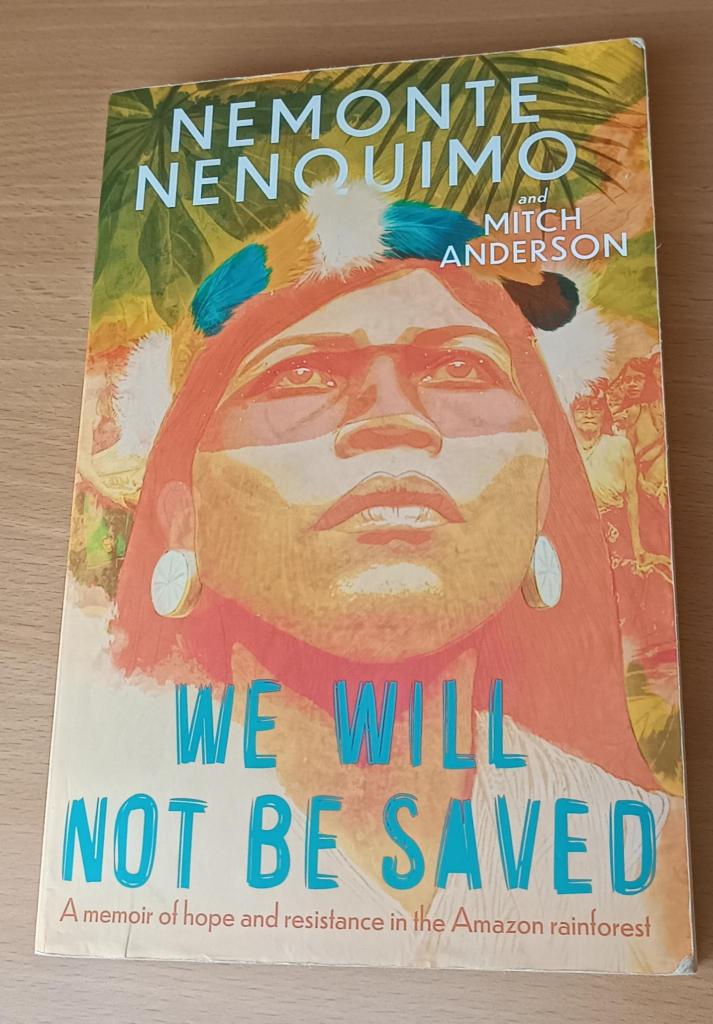
I read this book last year and since then I have been obsessed and telling everyone about it. This was the first memoir I read that touched on Climate injustices and I loved it for this and many more themes I could resonate with. We Will Not Be Saved follows the journey of the Waorani tribe of Ecuador. Having successfuly resisted colonization many years earlier, we are introduced to their traditional life and customs. The Waorani know nothing about civilization and the outside world. They walk naked, barefoot and depend on the forest for their livelihood.
It is not until an American missionary by the name Rachael Saint is sent to the community that things begin to seem like they are changing. Through the main Protagonist Nemonte Nenquimo, we learn how hard it is for Waorani to abandon their own god-a Jaguar they see and interact with for the white people´s God who they never see. The protagonist herself is faced with a dilemma of choosing between the missionaries and her own tribe. But when the missionaries betray her and her community, the choice becomes undeniably clear.
I would summarize the themes as follows:
1. Religion: For a community that was never colonized, religion is used as a form of manipulation and weapon of destruction. It is only those who denounce their traditional gods, accept the ´White People´s God´ and go to church that are ´rewarded´ with goodies such as sugar, salt, clothes, pills and other Western commodities not known to the indeginious people. As in history, religion does far more harm than good. It is the missionaries who pave way for an oil drilling company that could potentially destroy the forest and livelihood of the Waorani people. Far from environmental issues, this book hightlighted the silent abuses young girls underwent in the hands of Missionary men who were supposedly teaching them ´the word of God´.
2. Resilience: Martin Luther King once said “Our lives begin to end the day we become silent about things that matter.”
The Waoroani´s lives is not about to end as they exhibit enermous resilience in the face of injustices. Throughout this book I learned undocumented importance of forests and nature and how crucial it is to fight and protect them, especially now with the climate change crisis.
3. Family love: Families can sometimes be complicated. A mother´s love can be tough. A father´s love may be gentle. A siblings love could seem unexistent. But when push comes to shove, a family´s love could be the one thing that propel you towards the right direction. It may not always happen, but when it does, we let the moment pass almost unrecognized.
4. Grief: At what point does grief(if it ever) goes away?. Mourning, as portrayed in the book is a life long process. The pain of losing a loved one never really fades. We may forget their faces, how they smelled, but not how we felt around them. It is a difficult burden to carry, but one that we must endure. For some, the deceased are always with them in spirit; reincarcerated as a god or another human.
This book is ideal for people of all ages and background, but especially for Climate activists who want to join the fight for indigenous communities to protects their lands and forests in the harsh reality of a Capitalistic world.
Favorite snippets from the book
„When they found her metal box full of money, after some discussion it was agreed that this was worthless and bad so it should all be burnt.“
`“Where did that come from? People asked as smoke curled up through the trees. No one had ever seen Rachael with this paper money.
„The oil companies gave it to Rachael so that she would let them into our land,“ said a quiet voice.
„I couldn´t go home anymore. It was too late for that. I had left the forest many years ago because I believed in the white people. I had trusted them, thought they were better than us. Their skin, their teeth, their clothes, their planes, their promises. But now I knew they had no limits, that they wanted everything. They wanted to save our souls and change our stories and steal our lands.
My rating: 5/5
 Rafiki Book Circle